Gonzaga "Swag" Waste Audit & Sustainable Alternative Strategies
Question: How much waste does university-branded "swag" (apparel and merchandise freely distributed from the university) actually generate, and what lower-impact alternatives could replace it?
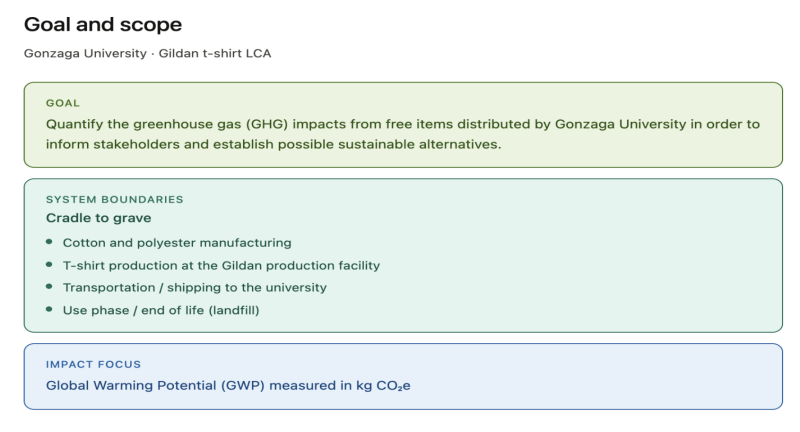
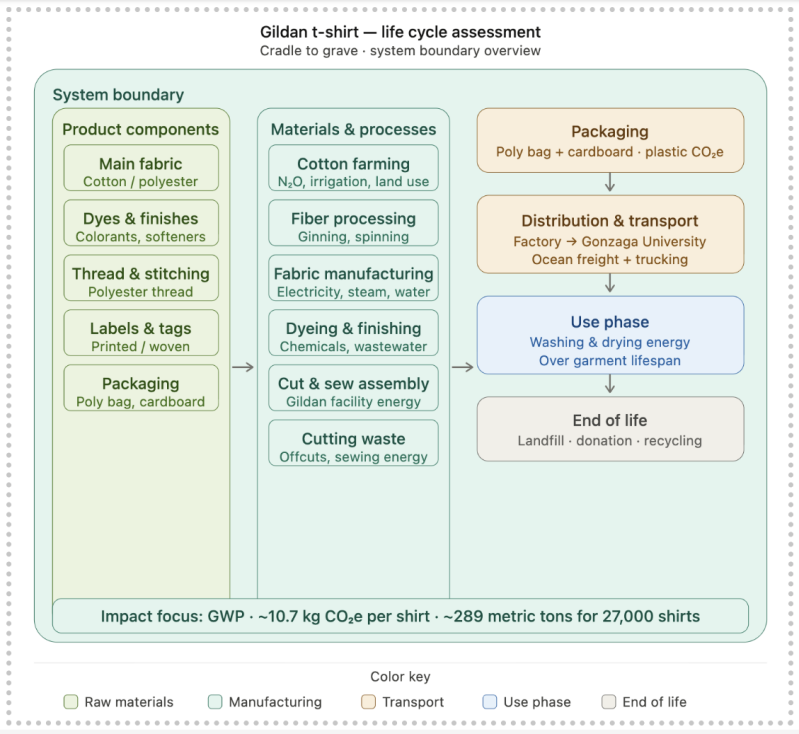
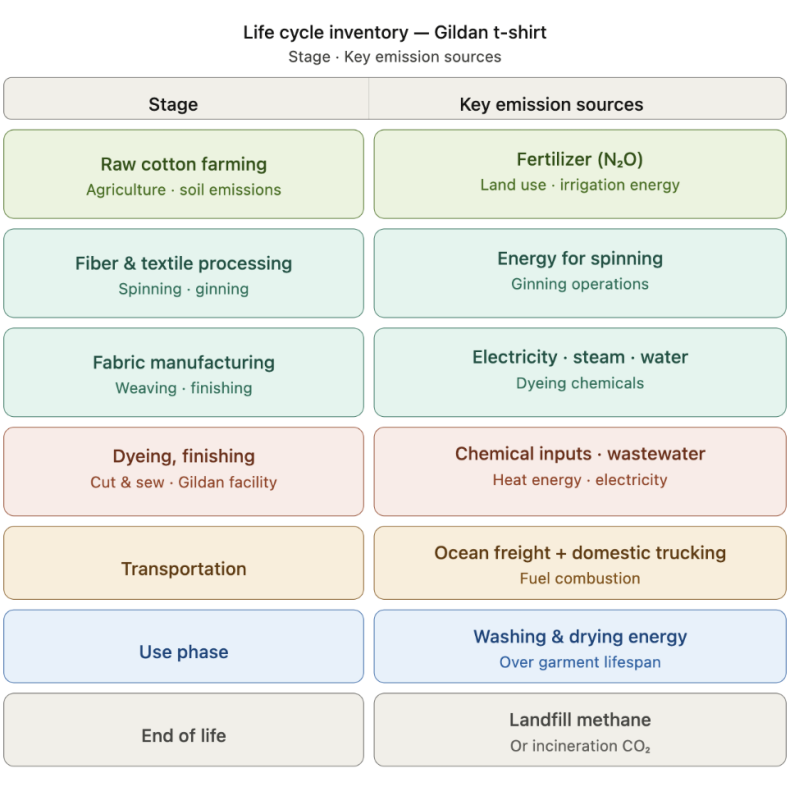
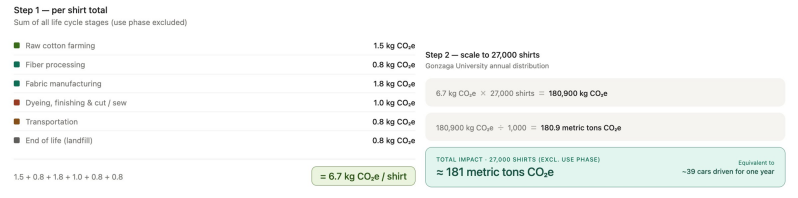
Approach: Conducted a campus-wide audit of swag distributed by university departments, ran a student survey on usage and preferences, and performed a cradle-to-grave life cycle assessment on t-shirts (the most-distributed item) to estimate CO2e emissions across production, transport, use, and disposal.
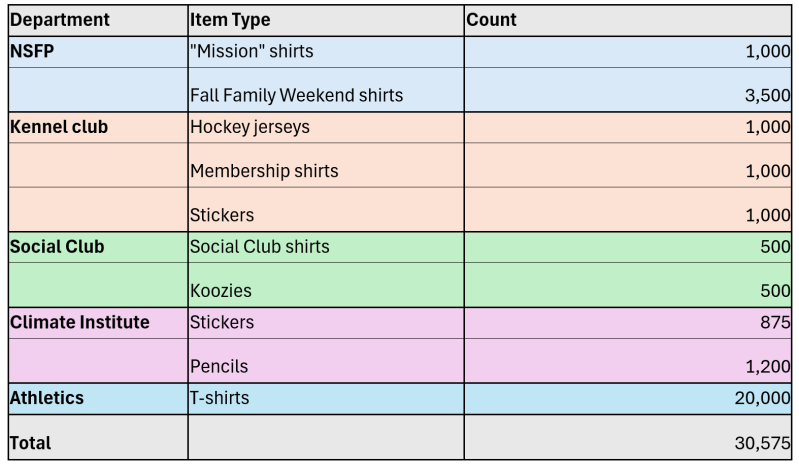
Findings: The university distributed over 30,000 swag items in one year, 27,000 of them t-shirts — generating an estimated 181 metric tons of CO2e annually (equivalent to ~39 cars driven for a year). Despite 60% of students preferring t-shirts as swag, only 8% reported using them regularly, revealing a major gap between stated preference and actual use.


Trader Joe's Sustainability Report & Strategy Proposal
The Question: Trader Joe's publishes no formal sustainability report despite competitors like Kroger issuing detailed ESG disclosures . What would a sustainability strategy look like for a company whose business model (private label, limited SKUs, no advertising) is built almost entirely on customer trust?
Approach: Analyzed Trader Joe's business model, competitive position, and existing (but unreported) sustainability practices, including its plastic-reduction framework and Neighborhood Share food donation program. Built the case for a formal sustainability plan around three pressures: competition from other go, stakeholder transparency, and supply chain risk. Proposed a three-pillar strategy (GHG reduction, waste reduction, ethical sourcing) grounded in established frameworks with a phased 3-year implementation plan.
Findings: Identified that Trader Joe's private-label dominance and limited product assortment give it a structural advantage for adopting circular packaging design that most competitors couldn't move on as quickly. Proposed concrete, time-bound targets: 30% GHG reduction by 2035, 30% less plastic packaging by 2030, and 100% recyclable/compostable/reusable packaging by 2035.
Trader Joe’s Sustainability Report
Company Overview
Sector Context
Trader Joe’s is an American grocery retailer headquartered in Monrovia California with 631 locations across the U.S. It competes within the broader grocery retail sector, a highly competitive, low-margin industry that generated approximately $1 trillion in sales in 2024. The sector is characterized by thin profitability and operational efficiency pressures, with average net profit margins of around 1.7%. As a result, grocery retailers rely heavily on scale, supply chain efficiency, and cost control to maintain profitability (FMI – The Food Industry Association).
Key Features of Trader Joe’s Business Model
Trader Joe’s uses a unique business model that sets itself apart form its competitors. The core of its business revolves around simplified supply chains, small store sizes, streamlined labor, and rapid product turnover. Unlike its competitors, it doesn’t rely on increased automation, large store sizes, and advertising to increase their profits. Rather, it relies on word-of-mouth, reputation, and trust from its customers. The stores provide a local, neighborhood friendly feel, while providing customers with quality products at low prices. (“Trader Joe’s Business Model: Private Label Focus And Treasure Hunt Appeal)
Revenue Model and Competitive Advantages
- Private label:
- Owning a private label allows for better control over products, quality, and costs which help profit margins. This model allows for flexibility to reformulate, resize, or retire items quickly in response to changing demand.
- Limited assortment:
- Fewer Stock Keeping Units (SKUs) compared to competitors, allows for simplified shelf management, high demand for curated items, and fast product turnover, which increases efficiency and profit
- Store level unit economies:
- Small store sizes allow for efficient labor practices, high product density, and high sales per square foot. Industry consultants estimated Trader Joe’s productivity at $1,500 - $2,000 per square foot, which is three times larger than the average supermarket.
- Engaging in store experience and human centered service:
- Offers enjoyable shopping experience for its customers through friendly service, curated assortment of exclusive food items, and a distinctive store environment that emphasizes simplicity and personalization.
Challenges & Risks
- Supply chain concentration
- Heavy dependence on a select number of co-packers and exclusive suppliers that increases likelihood of supply chain disruptions and quality issues. Weather events, geopolitical instability, or recalls could lead to large-scale stock shortages.
- Expansion and regulatory exposure:
- Selective site growth limits scale advantages while variations in zoning, labor, and environmental regulations can slow expansion and increase operational costs. Mistakes associated with labeling or sustainability claims could result in fines and reputational damage (“Trader Joe’s Business Model: Private Label Focus And Treasure Hunt Appeal).
Company Assessment
Although Trader Joe’s does not publish sustainability reports, the company has implemented various sustainability practices into its business operations. Their current sustainability initiatives and business model provide a foundation for what frameworks could be integrated into the company.
Within the grocery retail sector, packaging remains a major factor in waste and sustainability for company. Trader Joe’s uses a 5-point framework to reduce their plastic waste in order operate more sustainably
- Minimizing the amount of packaging materials used for each package.
- Sourcing renewable and recycled materials for its packaging material
- Choosing recyclable packaging materials
- Avoiding the use of harmful substances in packaging
- Providing clear information for customers as to what packaging is recyclable and what is not. (“Inside Trader Joe’s Podcast”).
Under this framework Trader Joe’s has implemented various sustainable practices to reduce their plastic waste including:
- Only offering customers reusable or paper bags
- Eliminating Styrofoam from all packaging
- Having more the half of produce items be offered in single buying form (Customers must choose between taking produce to go without a bag, or using a compostable bag)
- Packaging all cards in compostable sleeves (“Inside Trader Joe’s Podcast”).
Beyond plastic waste reduction initiatives, Trader Joe’s also commits heavily to food waste reduction, primarily through its Neighborhood Share Program. Through this program, the company donates 100% of unsold products to local nonprofit organizations. Each Trader Joe’s location has its own unique program that seeks to provide the most benefit to their community. In total, there are 2,100 Neighborhood Share partners nationwide (Neighborhood Shares).
Case for Adopting a Sustainability Plan
Considering Trader Joe’s business model, and already established sustainability measures, a formal sustainability plan would be greatly beneficial to the company. Increased competition within the grocery retail sector, growing expectations for transparency from stakeholders, and the need for stronger risk management across the supply chain all present cases for implementing a plan.
Competition
With top competitors like Walmart and Kroger adopting sustainability plans, it is becoming increasingly important that Trader Joe’s adopt a plan itself. Kroger, for example, publishes annual ESG reports which provide in-depth analysis covering their progress in sustainability. Without similar reporting, Trader Joe’s appears less proactive to stakeholders, even if the company has already implemented similar practices.
Transparency
A sustainability report will provide transparency that is mutually beneficial between both the company and its stakeholders. Customers are increasingly expecting transparency regarding the company’s environmental and social impacts. Trader Joe’s success is largely attributed to its strong reputation its built through trust from customers. The company does not rely on any paid advertising to increase its customer base but rather relies on word-of-mouth. Considering this business model, it is crucial that Trader Joe’s maintains its reputation and trust from its customers. Reporting its environmental impacts and setting clear targets, reinforces confidence that the company is acting responsibly and ethically
Risk Management
With high supply chain concentration, adopting a sustainability plan is necessary to ensure the company’s longevity. Trader Joe’s heavily relies on select co-packers and exclusive suppliers. Their supply chain is extremely vulnerable to weather-related events that result from climate change. Reducing its carbon emissions and environmental impact is increasingly important to minimize its supply chain risk.
Establishing a plan will also reduce risk from increasing regulatory exposure. Sustainability regulations and standards are likely to increase and effect Trader Joe’s across all its locations. Having clear sustainability goals and reporting will ensure the company is equipped for an inevitable increase in regulations and standards.
Sustainability Strategy Proposal
The priority for this sustainability plan is to expand on Trader Joes’s current sustainability efforts, set new initiatives, and increase transparency through annual reporting. Given Trader Joes’s business model, this plan incorporates three main sustainability areas of focus: GHG reduction, waste reduction, and ethical sourcing.
- GHG reduction: Trader Joe’s is responsible for GHG emissions through its manufacturing, shipping, and operations. Trader Joe’s can minimize its emissions by increasing operational efficiency and transitioning to low-emitting technology in all areas of its supply chain. Through various sustainability initiatives and measures, this plan proposes Trader Joe’s sets a 30% GHG reductions goal by 2035.
- Waste reduction: As a grocery retailer, waste reduction is a primary focus for sustainability efforts. The two types of waste that are of highest concern are plastic waste and food waste. Trader Joe’s has already made significant progress in reducing both these kinds of waste through various programs and measures. The Neighborhood Share Program ensures all unsold items are donated to local non-profits. Trader Joe’s has also cut down on plastic waste through switching to compostable packaging, eliminating Styrofoam, and offering only reusable paper bags to customers. However, the company still produces a significant amount of plastic waste through its packaging. This plan proposes setting a goal of reducing plastic waste packaging by 30% by 2030, and having 100% recyclable, compostable, or reusable, packaging by 2035.
- Ethical sourcing: Trader Joe’s provides little transparency with regards to its product sourcing, which has led to criticism and “greenwashing” allegations. The company sells many high-risk global commodities including coffee, chocolate, and bananas. These items are often associated with unethical sourcing due to child labor, forced labor, and low wages. This plan proposes implementing complete transparency to stakeholders, for how their products are sourced.
Frameworks, Protocols, and Guidelines
To carry out these sustainability initiatives, this plan proposes certain protocols and frameworks for the company to follow. These frameworks and protocols will provide Trader Joe’s with specific metrics and guidelines to help integrate sustainability into its business operations.
The Greenhouse Gas Protocol
The Greenhouse Gas Protocol is internationally recognized initiative for GHG reporting and accounting standards. The GHG protocol is split into two main standards:
- The GHG Protocol Corporate Accounting and Reporting Standards provide guidelines for companies to use for quantifying and reporting their emissions.
- The GHG Protocol Project Quantification Standard provides guidelines for quantifying emissions reductions for GHG mitigation projects
Trader Joe’s will use both these standards to help quantify their total emissions as well as their annual reduction in emissions. These guidelines will help the company in following ways:
- Prepare a GHG inventory using standardized approaches and principles
- Simplify and reduce costs from reporting
- Provide information that can build an effective strategy to reduce emissions
- Increase consistency and transparency of GHG accounting and reporting
The GHG Gas Protocol will provide Trader Joe’s with the necessary information and resources to accurately and efficiently report its GHG inventory as well as provide guidelines for implementing GHG reduction programs (World Resources Institute and World Business Council for Sustainable Development).
Ellen MacArthur Foundation: Circular Economy Framework
The Ellen MacArthur Foundation provides a framework companies can use for developing a circular business model. A circular business model is a system where materials never become waste. Products are kept in circulation through processes such as maintenance, reduce, reuse, recycling, and composting. Three principles underpin this framework: eliminate waste, circulate products and materials, and regenerate nature. In the context of Trader Joe’s business model, this framework can be used to eliminate both plastic and food waste.
Plastic waste is the largest form of material waste that Trader Joe’s produces. Although the company has made efforts to reduce its plastic waste, it remains an issue that the company has yet to adequately address. Under this model, Trader Joe’s can eliminate its plastic waste by shifting to exclusively recyclable and compostable materials. Trader Joe’s has two structural advantages that makes this model feasible for the company:
- Private-label dominance: Almost all products sold at Trader Joe’s are private labels, meaning the company has full control over packaging design, material selection, and supplier specifications. Trader Joe’s can implement changes to its packaging system that ensures all materials are able to be recycled and reused.
- Limited SKU complexity: Trader Joe’s has a relatively small assortment of products compared to traditional grocery stores. With limited SKU complexity, implementing new packaging standards and designs would be efficient and quick.
Given these two structural advantages, Trader Joe’s would be well-equipped to implement a circular business model into its operations. By designing packaging materials to be repurposed, Trader Joe’s can completely eliminate its plastic waste (Ellen MacArthur Foundation).
Fair Trade USA
Fair Trade USA is a nonprofit organization that certifies products for being ethically produced, ensuring safe labor conditions, fair wages, and community development for farmers. The company audits supply chains to promote sustainability and ethically sourced products. Partners must comply with strict environmental and social standards.
Trader Joe’s lacks transparency regarding information about its supply chain and its sourcing. This secrecy damages the company’s reputation and weakens trust with its stakeholders. Partnering with Fair Trade USA would give Trader Joe’s a framework for ensuring all its products is ethically and sustainably sourced. Publishing supply chain audits would reinforce confidence from its stakeholders that the company is holding itself accountable (Fair Trade USA).
Implementation
The implementation of this plan is estimated to take 3 years and will be comprised of three main phases: foundation, testing, and integration and scaling.
Phase 1: Foundation (2026-2027)
- Hire an ESG leadership team to carry out the sustainability programs outlined in this plan. This team be responsible for ensuring all Trader Joe’s locations comply with new sustainability measures and standards.
- Reach out and partner with third party organizations including Fair Trade USA, the Greenhouse Gas Protocol, and Ellen MacCarthur Foundation. Communicate with these organizations the company’s sustainability goals.
- Identify largest sources of waste and emissions from the supply chain.
Phase 2: Testing (2027-2028)
- Begin launching sustainability programs at a select number of store locations.
- Audit supply chain for ethical sourcing and sustainability.
- Begin reporting GHG emissions and plastic waste production to establish baseline metrics.
Phase 3: Integration and Scaling (2028-2029)
- Launch sustainability programs across all Trader Joe’s store locations.
- Fully integrate sustainability criteria into supply-chain and operations
- Scale circular business redesigns across all private-label products
- Publish annual sustainability reports outlining progress with emissions, packaging, and sourcing targets.
References
“Trader Joe’s Business Model: Private Label Focus And Treasure Hunt Appeal.” Latterly, https://www.latterly.org/trader-joes-business-model/?utm_source=chatgpt.com#google_vignette
“Trader Joe’s Supply Chain Proves That Less Is More.” Thomasnet, 11 Aug. 2025, https://www.thomasnet.com/insights/trader-joes-supply-chain/
“Inside Trader Joe’s Podcast”: Episode 11 | Sustainability at Trader Joe’s.” Trader Joe’s, Trader Joe’s Company, https://www.youtube.com/watch?v=RXMMyK0p6Rk&t=988s
“Neighborhood Shares.” Trader Joe’s, https://www.traderjoes.com/home/neighborhood-shares
World Resources Institute and World Business Council for Sustainable Development. The Greenhouse Gas Protocol: A Corporate Accounting and Reporting Standard (Revised Edition). 2004, https://ghgprotocol.org/sites/default/files/standards/ghg-protocol-revised.pdf
“What Is a Circular Economy?” Ellen MacArthur Foundation, https://www.ellenmacarthurfoundation.org/topics/circular-economy-introduction/overview
The Kroger Co. 2024 Environmental, Social & Governance Report. The Kroger Co., 2025, https://www.thekrogerco.com/wp-content/uploads/2025/03/Kroger-Co-2024-ESG-Report.pdf
Fair Trade USA. About Us. Fair Trade Certified, https://www.fairtradecertified.org/about-us/
FMI – The Food Industry Association. Food Industry Facts. FMI, https://www.fmi.org/our-research/food-industry-facts