Proximity to TRI Facilities and Asthma Prevalence
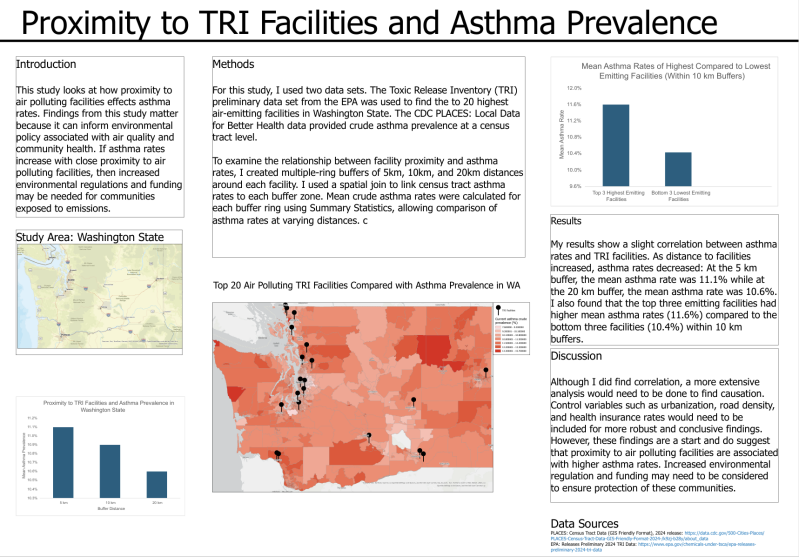
Question: Does living closer to major industrial air polluters correlate with higher asthma rates? Findings could support arguments for stronger environmental regulation and funding in exposed communities.
Approach: Mapped the 20 highest-emitting Toxic Release Inventory (TRI) facilities in Washington State using EPA data, then created 5km, 10km, and 20km buffer rings around each. Used a spatial join to link CDC census-tract asthma prevalence data to each buffer zone and calculated mean asthma rates at each distance.
Findings: Asthma prevalence decreased as distance from facilities increased — 11.1% within 5km vs. 10.6% within 20km. Communities near the top 3 highest-emitting facilities had a mean asthma rate of 11.6%, compared to 10.4% near the 3 lowest-emitting facilities.
Impact of Health Expenditure on Health Outcomes
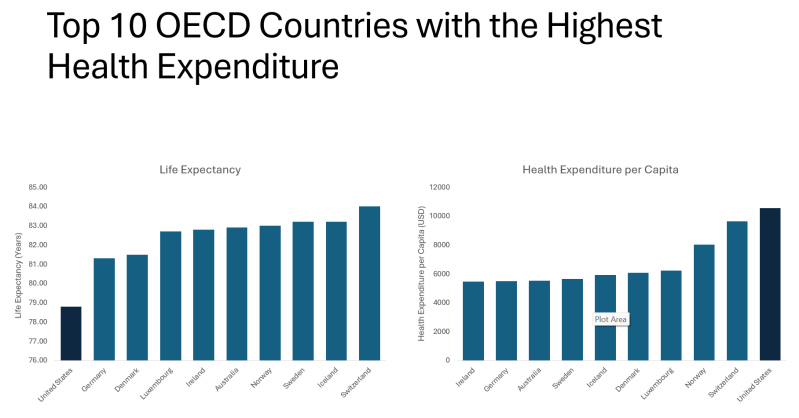
Question: Does increased health expenditure actually improve health outcomes — or should policymakers focus on efficiency and allocation instead of budget size?
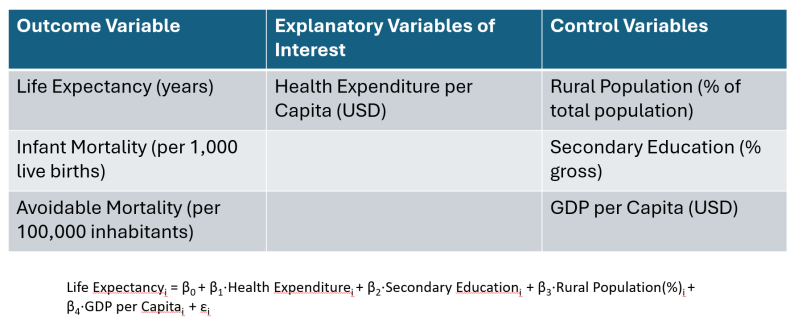
Approach: Built multiple linear regression models using OECD Health Statistics and World Bank data (38 countries, 304 observations), testing health expenditure per capita against life expectancy, infant mortality, and avoidable mortality — controlling for GDP per capita, education, and rural population.
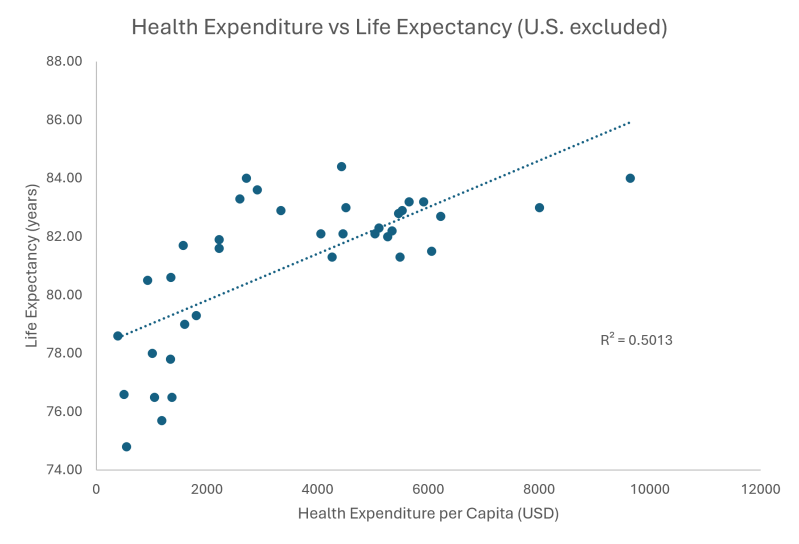
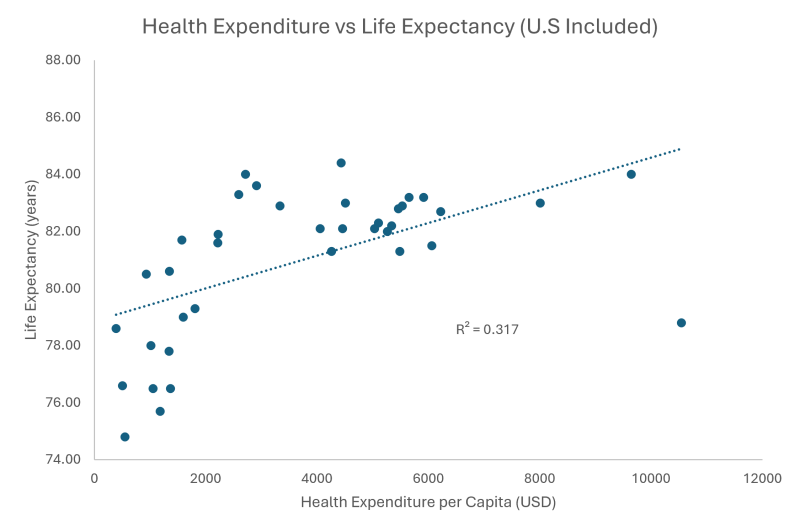
Findings: With the U.S. included, health expenditure showed no significant effect on outcomes. Once the U.S. was excluded as a statistical outlier, the relationship became significant: a $1 increase in per-capita health expenditure was associated with a 0.26-day increase in life expectancy and a measurable drop in avoidable mortality.